Expanding Grid Capacity Below Ground
Key Highlights
- Underground transmission supports urban growth, renewable energy integration, and long-term grid resilience by reducing land use conflicts and visual impacts.
- Copper conductors, with their high conductivity and mechanical durability, enable more compact, efficient, and reliable underground cable systems at voltages up to 345 kV and beyond.
- Modern XLPE insulated cables improve reliability and thermal performance, allowing utilities to upgrade aging infrastructure without extensive new construction.
- Underground systems are less vulnerable to weather-related outages, making them critical for maintaining service in wildfire-prone and storm-affected regions.
- Advances in HVDC technology and digital monitoring enhance long-distance, offshore, and regional grid interconnections, supporting renewable energy and grid modernization.
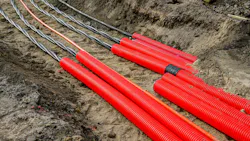
As utilities overhaul the electric grid to keep pace with soaring electricity demand, high-voltage underground cable systems are now central to expanding transmission, strengthening the grid, and planning for the long haul. Once reserved for places where overhead lines were not feasible, underground transmission has become a more widely considered option.
Underground transmission supports urban growth, renewable energy integration, system durability, and grid reliability. At the heart of these systems are high-performance copper conductors, prized for their exceptional electrical and mechanical properties and widely used in some of the world’s most demanding underground transmission applications.
Why Is Underground Transmission Gaining Ground?
The accelerated growth of AI-driven data centers, industrial reshoring, and expanding renewable energy resources is increasing demand on the transmission network. At the same time, obtaining permits for new overhead transmission corridors has become increasingly difficult due to land-use constraints, environmental considerations, and public opposition.
In many regions, underground transmission offers utilities a practical means of expanding capacity while reducing visual impacts, right-of-way conflicts, and some of the siting challenges associated with new overhead infrastructure. In established urban areas, underground infrastructure is often the only practical solution because existing development leaves little room for new overhead lines. Many older cities already have underground conduit systems that can be reused, as utilities replace aging transmission cables with higher-capacity designs without constructing entirely new corridors.
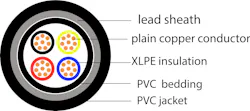
Modern cross-linked polyethylene (XLPE) insulated cables have improved reliability, thermal performance, and longevity. Today, XLPE systems are steadily replacing aging oil-filled installations that have been in service for decades. Utilities can often remove old cables and reuse existing conduits, increasing transmission capacity without the need for new underground corridors. XLPE cables—routinely operating at voltages from 69 kV to 345 kV and beyond—are now widely used in urban networks, major infrastructure builds, and renewable energy applications.
Considerations for Underground Copper
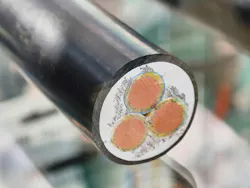
- Greater conductivity: Copper is roughly 64% more conductive than aluminum, allowing it to carry the same current with a smaller conductor.
- More compact cables: Smaller cables fit more easily within crowded duct banks, conduits, and tunnels while helping utilities deliver more power through limited corridors
- Simpler installation: Copper’s compact size and flexibility can reduce duct dimensions, civil construction needs, and the complexity of directional drilling.Actual installation requirements, however, depend on the cable design, installation method, and site conditions.
- Lower energy losses: Reduced electrical resistance limits I²R losses, improving efficiency and potentially reducing energy losses over the cable’s service life.
- Strong mechanical performance: Copper’s tensile strength, ductility, fatigue resistance, and flexibility can support long cable pulls and complex underground routes
- Long-term reliability: Copper maintains dependable electrical connections through decades of thermal cycling, helping support long-term system performance.
Although lightweight aluminum is often preferred for overhead lines, copper’s conductivity, compactness, flexibility, and durability make it well suited in demanding underground applications.
Strengthening the Grid for the Future
One of the potentially important applications for underground transmission is grid hardening. This typically entails upgrading power system components and infrastructure to reduce their vulnerability to severe weather and other hazards. Such events have highlighted the vulnerability of overhead transmission infrastructure.
Grid Resilience and Critical Infrastructure
Underground systems are not immune to failures; they are generally protected from many of the external hazards that affect overhead lines, such as falling trees, high winds, and wildfire exposure. Utilities are also considering underground transmission into resilience-focused investments, particularly in areas where maintaining continuous electric service is critical, such as hospitals, military facilities, airports, transportation corridors, and large commercial developments.
Major utility initiatives, including large-scale undergrounding programs in wildfire-prone regions, illustrate how underground transmission is becoming one option utilities can consider when addressing specific reliability, resilience, or siting challenges
Urban Electrification and Data Center Growth
Urban transmission expansion is another major driver. Population growth, building electrification, electric vehicle charging infrastructure, and rapidly expanding data center campuses are pushing many existing transmission systems toward their capacity limits. Because urban environments often lack space for new overhead lines, utilities are turning to underground cable systems to increase transmission capacity while reducing disruption to surrounding communities.
Copper conductors are well suited to these projects because their higher ampacity enables greater power transfer within the limited space of underground conduit systems. The large electrical loads associated with some data centers also are creating new transmission and distribution challenges for utilities. Many of these facilities bring power underground directly from nearby substations, even where overhead service is possible, to reduce exposure to storms, vegetation, and other outage risks.
HVDC and Renewable Energy Integration
High-voltage direct current (HVDC) technology is contributing to the expanding role of underground transmission. HVDC cable systems have become attractive for long-distance transmission, offshore renewable integration, and asynchronous grid interconnections. Compared with conventional HVAC systems for long-distance transmission, HVDC systems can reduce electrical losses, improve power-flow control, and require narrower transmission corridors.
As renewable generation expands and regional grids become increasingly interconnected, HVDC underground cable systems may play an increasing role in transmission development. In offshore wind applications, where subsea cables operate in highly corrosive marine environments, copper conductors also provide high electrical conductivity and can provide long service lives when properly designed and protected from the marine environment.
Engineering for Long-Term Performance
Regardless of these advantages, underground transmission systems call for careful engineering. Heat dissipation remains one of the most important design considerations, because underground cables cannot cool as effectively as overhead conductors exposed to ambient air. Engineers must evaluate soil thermal resistivity, cable spacing, installation depth, thermal backfill materials, and duct bank design to ensure adequate ampacity.
Many modern underground cable systems also incorporate temperature monitoring and digital sensing technologies that enable operators to continuously monitor cable performance and optimize system loading. Copper's high thermal conductivity can help transfer heat generated within the conductor, although overall cable thermal performance depends on the complete cable and installation design.
Evaluating Total Lifecycle Value
Although underground transmission projects typically require greater upfront capital investment than comparable overhead lines, utilities are increasingly evaluating projects based on total system value. Reduced outage risk, improved resilience, lower vegetation management costs, public acceptance, and improved energy efficiency can factor into the higher initial investment over the asset's 40- to 60-year service life.
While underground transmission is often viewed as prohibitively expensive, the cost premium is highly dependent on project-specific conditions and must be weighed against decades of operational, reliability, and maintenance considerations. In many applications, copper conductors can contribute to the overall value proposition through their conductivity, compact size, and mechanical properties.
Supporting Future Grid Modernization
As the grid continues to modernize, underground transmission systems will become an increasingly important complement to traditional overhead infrastructure. Combined with advances in insulation technology, digital monitoring, and HVDC applications, copper conductors remain an important conductor material for underground transmission applications. Together, underground cable systems and copper conductors can help utilities address the space, capacity, reliability, and resilience challenges associated with a more heavily electrified grid.
FAQs
Why are utilities expanding underground transmission systems?
They provide an option for adding capacity where overhead lines face space, permitting, environmental, or public acceptance challenges.
What advancements are being made in power transmission technology?
Advancements include higher-capacity XLPE-insulated cables, HVDC systems, digital monitoring technologies, and greater use of copper conductors, which support compact cable designs, lower energy losses, and reliable power transfer in constrained underground corridors.
Why is copper used in underground transmission cables?
Copper’s high conductivity enables smaller cables, lower energy losses, and greater power transfer within tight underground corridors.
What are XLPE-insulated cables?
XLPE cables use cross-linked polyethylene insulation to provide high dielectric strength, thermal performance, and long service life.
Are underground transmission systems more reliable than overhead lines?
They are less exposed to hazards such as high winds, falling trees, ice, and wildfires, although they still require careful engineering and monitoring. Reliability also depends on system design, installation, maintenance, and the specific hazards present at a site.
Are underground transmission systems more expensive?
They generally cost more upfront, but improved resilience, efficiency, public acceptance, and lower maintenance can factor into lifecycle cost considerations.
About the Author
John Hipchen
John Hipchen is the Director of Energy and Electrical Systems at the Copper Development Association and also serves as Executive Director of the Electric School Bus Coalition. His technical background and business development experience led to engagements tracking the electric vehicle and electric vehicle charging markets starting in 2010, and later expanded that interest to include renewable energy and the clean energy transition. Today, by participating in the development of codes and standards and by working with groups involved in clean energy developments, John works to ensure that copper and copper alloy solutions continue to address society’s challenges.