Live Tutorials to Deliver Hands-On Learning at 2026 IEEE PES T&D Conference and Exposition
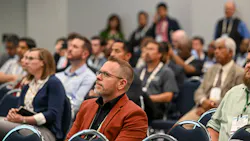
The 2026 IEEE PES Transmission & Distribution Conference & Exposition will feature a series of live tutorials aimed at helping power and energy professionals expand their technical expertise and advance their careers.
Hosted by the IEEE Power & Energy Society, the instructor-led sessions are designed to provide in-depth training on key transmission and distribution topics. The immersive tutorials will focus on delivering practical, real-world knowledge, with content led by industry experts and tailored for engineers and other professionals working across the power sector.
Attendees who participate in the tutorials will have the opportunity to earn Professional Development Hours (PDHs) and Continuing Education Units (CEUs) upon completion. The sessions are positioned as an optional add-on to full or single-day event registration and are intended to help participants stay current on evolving technologies, standards, and best practices while strengthening their technical skill sets.
The tutorials are geared toward a range of industry professionals, including utility engineers, technical staff, project managers, consultants, academic researchers, faculty, and early-career professionals seeking to deepen their knowledge of power and energy systems.
Among the offerings is “TUT07 Planning the Integrated T&D System,” scheduled for Monday, May 4, from 1:00 to 5:00 p.m. The session will be led by instructors from Pacific Northwest National Laboratory (PNNL): Dr. Trevor Hardy, Dr. Monish Mukherjee, Jessica Kerby, and Eran Schweitzer.
The tutorial will provide an overview of distributed energy resource (DER) impacts on power system operations, along with modeling and simulation techniques to improve visibility into those impacts. It will also cover planning approaches for both distribution and bulk power systems in high-DER environments, as well as integrated transmission and distribution modeling and simulation techniques to support management of increasingly complex grid conditions.