Why Field Execution Is Becoming the Front Line of Grid Resilience
Key Highlights
-
Aging infrastructure and rising demand are straining field execution. Fragmented tools and siloed data leave crews without the real-time context needed to manage heavier loads and risk.
-
Field work is now a strategic capability. Grid reliability depends on connected, data-driven execution that supports safer, faster, and more consistent decisions.
-
Unified field platforms strengthen resilience. Mobile-first solutions like Hitachi Energy’s Service Suite X connect crews, data and systems to improve safety, visibility and maintenance outcomes.
Aging Infrastructure Meets Accelerating Complexity
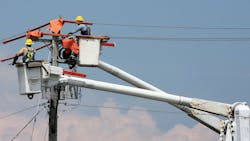
As energy demand climbs, operational strain on the grid intensifies. Much of the U.S. power system, including power lines, breakers, switchgear, and transformers, now operate well beyond their intended life span. These assets were never designed for today’s load growth or digital complexity. Yet, field crews are still expected to operate with processes and tools built for a far simpler era.
Critical information sits in different locations. Asset condition data, switching steps, hazards, and work history are spread across siloed platforms requiring crews to assemble context in the field, often while managing risk, time pressure, and incomplete situational awareness. In high-stakes environments, these gaps translate into lost time, elevated safety exposure, and operational uncertainty.
At the same time, electrification across transportation and industry is accelerating, and power-hungry data centers are reshaping demand patterns at a pace that challenges traditional planning and maintenance cycles. Utilities face mounting pressure to improve reliability, limit outages, and integrate new sources of generation, storage, and load. New infrastructure will help, but it won’t resolve the operational fragmentation that shapes daily work. The system is stressed, and disconnected work execution makes that stress more dangerous.
Reliability, safety, and resilience depend on reducing the information gaps that shape decisions in the field.
The grid cannot meet future reliability expectations without elevating field work into a more connected, data-driven operational discipline, one where crews have real-time context, unified workflows, and the intelligence needed to make fast, accurate decisions.
Why Field Work Has Become a Strategic Capability
AI-driven demand spikes, electric fleets, distributed energy resources, and volatile weather patterns expand the demands placed on field personnel. Work that historically relied on paper documentation and field-honed expertise now requires real-time awareness of system conditions, hazards, asset states, and environmental factors. The result is a widening disconnect between what the grid demands from field personnel and the operational support they receive.
Fragmentation creates operational drag. Crews lose time searching for information, reconciling inconsistencies, and navigating manual workflows that require close attention. As field worker retirements accelerate, new entrants face steeper onboarding curves. Veteran knowledge is leaving the system, making repeatable field execution a necessity. Every reclaimed minute of productive field time becomes increasingly valuable.
The quality of field decisions shapes the reliability of the grid. Treating field work as a strategic operational discipline means giving crews the information, context, and decision support they need to execute consistently, safely, and accurately, reducing cognitive load, eliminating friction, and enabling consistent execution even as variability grows.
Digital Tools Built for the Realities of the Field
Modern field‑centric platforms are emerging to help utilities unify information and strengthen operational execution. Crews maintain line-of-sight in high-risk zones, reducing distraction and hazard interaction risks. The shift is not about adding new layers of technology but about making work more coherent and safer for the people closest to the assets.
The most effective approaches share several characteristics:
- Enable focus in high‑risk environments. Workflows that keep eyes on hazards and reduce manual data entry support safer and more consistent execution with audit-ready records.
- Bring essential information together. Asset data, service history, switching steps, hazard intelligence, and as-built network models should reside in a single operational workspace rather than across multiple systems.
- Connect field and control room operations. Clean data flow between mobile tools, OMS, and ADMS creates alignment during switching, restoration, and status updates.
- Reflect environmental realities. Temperature thresholds, storm activity, and wildfire risk influence whether work proceeds. Real‑time environmental intelligence helps crews adjust routing and timing.
- Mobile-first and map-centric. This orientation gives crews a clearer operational picture at the point of work, helping them stay aligned with real‑world conditions.
Hitachi Energy’s Service Suite X is designed around these principles, emphasizing operational clarity and consistent execution. The goal is to simplify the path crews take to complete work, to reduce the friction that slows jobs and clouds decisions. A clearer operational picture supports safer work and more accurate records, while real‑time visibility minimizes the need to reconcile information manually in the field.

Turning Field Insights into System-wide Intelligence
Field work generates some of the most valuable operational data in the utility enterprise. When collected consistently and fed back into planning and operational systems, it becomes a lever for strengthening asset strategies, improving outage performance, and reducing long-term risk.
Solutions like Service Suite X help create the closed-loop feedback utilities need. Real-time updates from the field keep system models current, ensuring that future work begins from an accurate foundation. Workflows become more adaptive, maintenance becomes more targeted, and operational decisions become more grounded in real-world conditions.
Over time, this shift supports a move from reactive tasks toward more predictive, condition-based maintenance, an evolution essential for extending asset life and maintaining reliability as stress on the system rises.
Preparing the Grid for What Comes Next
As demand grows and operating margins tighten, utilities need steadier, more coordinated execution across the grid. Giving field crews clearer context and simpler paths to complete work strengthens decision-making and reduces friction in day‑to‑day operations.
Preparing the grid for the years ahead means equipping crews with the solutions, insight, and support to keep existing infrastructure performing under more challenging conditions. Utilities that build this operational alignment now will be better positioned to deliver the reliability and resilience that the next era of electrification requires.
Sponsored By: