Key Highlights
- V2G technology allows EVs to bidirectionally exchange power with the grid, turning parked vehicles into flexible energy assets.
- Automakers like GM and Tesla are actively deploying V2G features, aiming to integrate EVs into broader energy management systems.
- Most vehicles are parked 90-95% of the time, presenting a significant opportunity for energy storage and grid support.
Several months ago, I wrote about customers embracing distributed energy resources (DER)s but slow to support becoming part of VPPs (virtual power plants) systems. It’s a complicated subject with multiple issues like customer trust, regulatory support, and utility acceptance. A few months later I wrote about electric vehicles (EVs) in racing and the racetrack tech being grid-relevant. I also mentioned that I was thinking about trading my old gas-buggy in for a hybrid EV rather than an EV because of a lack of EV infrastructure. I don’t know if these columns made my inbox a target for those topics, or if it’s just me, but they’re providing lots of fascinating reading.
With all these reports and papers coming to my inbox, it got me interested in the non-plug-in hybrid EV version and I ended up with one. The best way I can describe this hybrid EV is it’s a computer on wheels. I read a report from IBM that said today’s EVs are “a software-defined vehicle whose core functions and features are controlled, updated, and enhanced through software.” Amazingly, recalls are fixed with over-the-air software updates. Being able to update and revise an EV’s software takes advantage of an application I hadn’t considered.
Storing and Sharing Power
Have you heard of V2X (vehicle-to-everything) systems? They’re basically a wireless communication technology that takes EVs to a different level when it comes to data sharing. V2X allows EVs to communicate with other EVs, networks, infrastructure, the power grid, etc. My hybrid got my attention the first time I drove it through a popup work-zone. As I drove past a reduce speed limit sign, the heads-up display quickly told me to slow down to 20mph. It also identifies speed cameras. That’s a small sample of V2X abilities, but it’s the V2G (vehicle-to-grid) application that we’re most interested in. Keeping it simple, V2G is a subset of V2X, which is an umbrella term for what’s taking place.
In the past few years, technological progress has made it possible for V2G systems to move from pilot projects into commercial operation. Essentially, the development of inverter-based resources allowed manufacturers to design EVs and chargers that are capable of V2G operation, but it also required sophisticated communications technologies. When those elements are combined, the EVs and the power grid can make bidirectional power flows happen. There are many good technical papers on the subject, so that’s as deep as I’ll go.
Making Idle Time Valuable
There are a lot of traditional EVs on the road, but several studies place the global number of V2G capable EVs around 1.2 million. That number is increasing and it would not be surprising to that some technological development opens up our legacy EV fleet to V2G in the future. So why is there so much interest in V2G? That stems from the fact that most cars, both gas-guzzlers and EVs, spend their lives parked. Studies say that most vehicles sit idle 90-95% of their day. We drive our vehicles to work or shopping and park them.
At the end of the day, they are driven back home and parked once again. That’s the market V2G providers are targeting and it’s even better if solar power is recharging them while they’re parked. Utilities are expected to start expanding V2G programs, which will create revenue streams for EV owners and those utilities involved with V2G programs. A few months ago, GM announced it was partnering with utilities to make parked EVs into “active grid assets” and plan to make that capability a stander feature on future EVs. They activated the V2G capability in more than 250,000 of its existing vehicles in the U.S. “as a potential model for other automakers.”
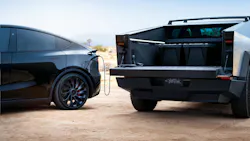
Tesla stated it is implementing its first “true” V2G program called the Powershare Grid Support Program. It is for Cybertruck owners specifically in Texas markets with CenterPoint Energy and Oncor. According to Tesla, each Cybertruck has 123 kWh battery capacity, which equals about 9 Powerwalls. The V2G program will operate through Tesla’s existing virtual power plant infrastructure initially consisting of Tesla’s Powerwall installations. Tesla plans to expand its V2G program in California with PG&E, SDG&E, and SCE soon.
Will V2G systems be a major trending technology in 2026? V2G’s global market value was reported at about US$6.85 billion for 2025. With real-world deployments increasing, V2G is a contender, which shows it’s becoming a “mainstream grid resource.” There will be challenges, but that makes watching tech-trending exciting!
About the Author
Gene Wolf
Technical Editor
Gene Wolf has been designing and building substations and other high technology facilities for over 32 years. He received his BSEE from Wichita State University. He received his MSEE from New Mexico State University. He is a registered professional engineer in the states of California and New Mexico. He started his career as a substation engineer for Kansas Gas and Electric, retired as the Principal Engineer of Stations for Public Service Company of New Mexico recently, and founded Lone Wolf Engineering, LLC an engineering consulting company.
Gene is widely recognized as a technical leader in the electric power industry. Gene is a fellow of the IEEE. He is the former Chairman of the IEEE PES T&D Committee. He has held the position of the Chairman of the HVDC & FACTS Subcommittee and membership in many T&D working groups. Gene is also active in renewable energy. He sponsored the formation of the “Integration of Renewable Energy into the Transmission & Distribution Grids” subcommittee and the “Intelligent Grid Transmission and Distribution” subcommittee within the Transmission and Distribution committee.