Noteworthy AI Platform Available to 32 Florida Municipal Utilities Through FMPA Program
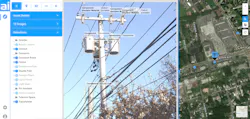
Noteworthy AI announced that all 32 member utilities of the Florida Municipal Power Agency (FMPA) will have access to its Inspect platform, which uses artificial intelligence (AI) to collect and analyze electric distribution infrastructure data.
The program follows FMPA’s competitive request for proposals for an AI Utility Infrastructure Data Collection System, through which Noteworthy AI was selected as an awarded provider. Participating utilities receive standardized terms, negotiated group pricing and flexible deployment options based on their priorities, budgets, staffing and project timelines.
FMPA is a Joint Action Agency serving more than 2.5 million Florida residents, from the Panhandle to Key West, representing approximately 11% of the state’s population. Nationally, about 2,000 community-owned, not-for-profit public power utilities serve more than 55 million people across 49 states and five U.S. territories.
Flexible Deployment Options for Utilities
Through FMPA’s Joint Purchasing Program, negotiated pricing can be up to 80% lower than conventional field data collection and analysis methods, depending on project scope and deployment model. The program is intended to provide smaller and resource-constrained utilities with access to capabilities and economies of scale that may be difficult to achieve independently.
Participating utilities can purchase camera systems for continuous use on existing fleet vehicles, allowing data collection during routine operations. They can also rent cameras for targeted projects, baseline patrols or storm assessments, or hire Noteworthy AI to provide collection services, including vehicles and drivers.
AI-Based Infrastructure Data Collection and Analysis
Noteworthy AI’s Inspect platform uses vehicle-mounted cameras and AI to geolocate distribution poles and capture high-resolution, timestamped images as vehicles travel through utility service territories.
Cloud-based analysis provides data for asset inventories and geographic information system (GIS) development, pole and equipment condition assessments, joint-use attachment inventories, outdoor lighting audits, vegetation detection and post-storm damage assessments. The platform is designed to support these functions through a single field collection process, reducing the need for separate truck trips.
Results are available through Noteworthy AI’s Inspect Cloud application and can be transferred to existing systems of record, including Esri ArcGIS Online.
The program builds on deployments with municipal members and other investor-owned, cooperative and municipal utilities across Florida. In Starke, Florida, approximately eight hours of data collection covered about 2,300 poles. A third-party attachment audit also identified potential revenue opportunities from previously uncounted pole attachments, helping offset the project’s cost.
The program also follows Noteworthy AI’s association-wide affiliation with American Municipal Power.
“Florida’s municipal utilities are cornerstones of their communities, and we’re excited to make advanced grid intelligence more accessible to FMPA’s member utilities,” said Chris Ricciuti, CEO of Noteworthy AI. “Whether a member purchases, rents or fully outsources collection, the program offers a practical, scalable path from GIS baselines to faster storm response.”
“We had no mapping system and were operating on tribal knowledge. There was no way to know how many poles, transformers, streetlights or joint-use attachments were out there, so we were working blind,” said David Sparks, Utility Director and Assistant City Manager for the City of Starke. “In just a few hours, Noteworthy AI gave us data that would have taken us years to collect. We don’t just see points on the map, we have a whole encyclopedia of knowledge of what’s at each point.”
Supporting Storm Readiness and Restoration
Routine data collection can establish and update records of asset locations and conditions. Following hurricanes and other severe weather events, the same technology can be used to conduct damage-assessment patrols, helping utilities expand their assessment capacity when mutual-aid resources are limited or supporting other utilities affected by the same event.
The resulting information can give operations teams earlier visibility into damage to support crew deployment, materials planning and restoration estimates.
Although the Federal Emergency Management Agency (FEMA) independently determines eligibility for disaster assistance and reimbursement, timestamped visual records of infrastructure conditions before and after an event can provide documentation to support eligible disaster-assistance claims and help reduce the risk of qualifying costs going unreimbursed.