Line Wives: The Power Behind the Power
Key Highlights
- Line wives often manage full-time jobs and family responsibilities while supporting their spouses' demanding careers.
- Storm work and emergency responses require long hours away from home, impacting family celebrations and holidays.
- Social media groups and community support networks play a crucial role in helping line families stay connected and share resources.
- Safety concerns are a constant worry, with stories of accidents, injuries, and even life-threatening incidents highlighting the job's dangers.
- Events like the International Lineman’s Rodeo strengthen family bonds and showcase the skill and bravery of lineworkers, inspiring pride among families.
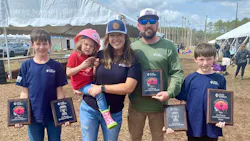
Lynne Swayne married her high school sweetheart 40 years ago, and today she’s a proud line wife in Waterford, Michigan. Over the last four decades, her husband, Tom, has served as a journeyman lineman, general foreman and supervisor for DTE Energy, and her son-in-law just completed his apprenticeship and is now working as an overhead lineman.
"The line family is family, and I am fiercely loyal and protective of them,” she said. “We share a bond that others just can't understand.”
Line work isn’t just a job — it’s a family tradition, said Brittany Burrell, who has been married to Daniel, a journeyman lineworker for Duke Energy, for the past 16 years. Two years before they got married, he started his career in the line trade in underground work with a contractor before coming to Duke Energy 10 years ago.
“His dad, who recently retired from Duke Energy, was also a lineworker, so this work has always been part of our family,” said Burrell, who lives in Henderson, North Carolina. “My oldest son has expressed interest in line work, and my brother-in-law is also a lineworker. I think it becomes a family tradition because there is a real sense of satisfaction in helping people. It is more than just keeping the lights on. The work is rewarding, challenging and meaningful.”
LaCosta Diggs said her husband and son both work in the line trade. She has been married for nearly 32 years to Michael, a lineman for Middle Tennessee Electric, and their son, Collin, is a lineman for Jackson Energy Authority. “Growing up, all he ever wanted to do was be a farmer, and I think seeing the positive impact his father has made over the years made him realize he wanted to be part of that trade,” she said.
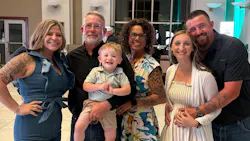
Balancing the Line Life
Because line work is demanding and not a typical 9-to-5 career, being married to a lineworker takes both patience and understanding, Burrell said.
“Storm work and long hours can take some getting used to, but this career has also provided a lot for our family,” she said. “I am proud of what my husband does, and I know he gets a lot of satisfaction from serving his community. When Hurricane Helene hit, he was gone a lot, and that was hard, but I also saw how important his work was to the people who needed help.”
When you are in a line family, storm duty becomes part of your life, and you learn how to adjust, she said. “In the beginning, it took some getting used to,” she said. “The job is unpredictable, and that can be hard at first. Over the years, I have learned to give more grace and be more flexible.”
Swayne said while she is very proud of her husband and enjoys the camaraderie of the line trade, living the line life does come with its challenges. “Most of the line wives I know, including myself, are educated, and we hold down full-time jobs while raising our families,” she said. “Our husbands could be out of state working storms or hurricane restoration. It's a hard, but very rewarding, life. Many holidays and family events have been spent alone while our husbands are restoring power, and many times, line wives are single moms.”
She said it’s hard when there are major family events and holidays, and line wives’ husbands can’t be there.
“The money is good, and I’m grateful — it has provided a wonderful life for our family,” Swayne said. “But we had a vacation end early, and there have been countless kids’ sporting events, Easters and Christmases when Tom wasn’t here. I was certain that he was going to miss the birth of our first grandchild because he was doing hurricane restoration in Florida, but thankfully, he made it home just in time.”
Marilyn Shepler has been married for 41 years to her husband, William, who spent four years in the power plant, four years in the line department and 34 years in the trouble department for Tampa Electric in Florida. During his career, he has responded to car-pole accidents, turned off power to customers and businesses for non-payment, performed cut-outs, replaced transformers and restored power following ice storms and hurricanes. In the beginning of their marriage, Shepler remembers crying and being worried, tired, angry and lonely when he went away on storms, and grateful when he came back home.
Life as a line wife has its ups and downs, she said. For example, she remembers taking her kids to practice and school sports by herself, going to weddings and parties without him and not having him home for birthday celebrations.
“He has worked so hard so I could stay home and raise our kids, but I have spent a lot of time alone,” she said. “When we have him, it makes those times special. I’m grateful for the life we’ve had and thankful that he has made it through this life safely.”
Words of Wisdom for Other Line Wives
- Be prepared to hold down the fort on your own. “Your husband will be working ungodly hours with so many times overnight and out of state, and you may have to try to keep small children quiet while their dad is sleeping, as he may have literally worked days on end,” said Lynne Swayne, wife of Tom, a journeyman lineman for DTE Energy.
- Be supportive and learn to adjust to the unpredictable nature of the job. “It’s not always easy, but understanding the importance of the work helps,” said Brittany Burrell, the wife of Daniel, who works for Duke Energy. “Patience, flexibility and community make a big difference.”
- Take time for yourself. Marilyn Shepler said she connects with other line wives on social media and goes out to lunch with friends and family.
- Keep the faith. Shepler also gains support from her church family and keeps close to God by reading the Bible or a devotional and praying.
- Stay strong. There will be times when line wives have to be both the mother and father to their children when their spouses are away on storm duty or responding to emergencies, said LaCosta Diggs, married to Michael. "I have a great pride and respect for what the men and women of the industry do daily," she said.
The days are long and the nights are lonely as a line wife, Diggs said. Her husband has been a lineman for 35 years and spent 27 of those years working for Jackson Energy Authority in Jackson, Tennessee, as an apprentice, lineman, lead lineman and apprentice trainer. They moved to the Middle Tennessee area in 2019, and he began working as a lineman for Middle Tennessee Electric to build and maintain power lines.
While he’s away on storm duty, she has realized that she must be the strong one for her children because their father was already at work and doing his job. She said he couldn’t be home for special occasions, like senior recognition ceremonies or sporting events, or support them as much as he wanted, but over the years, she realized it’s part of the job.
“He has a demanding job that kept him away sometimes, but I am very proud of the work he does, and I would never want it any other way,” she said. “As a wife, I worry, but as a line wife, it makes me proud just knowing that he is making a difference when it truly matters the most,” she said.
Spotlight on Safety
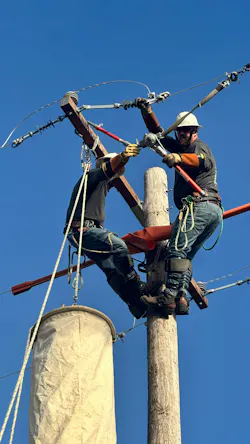
While many spouses travel for work, leaving their families home to hold down the fort, the line trade is in a league of its own. For example, lineworkers can be called out in the middle of the night and on weekends and be away from home for days, weeks or even months at a time to restore power.
Sometimes line wives stay at home while their spouses travel for storm work, while others raise their families on the road.
Either way, they often worry about their husbands getting hurt or electrocuted on the job — or worse, Swayne said. For example, when she was a young line wife, she remembers having a foreman show up at her door. “I was absolutely panicked,” Swayne said. “It turned out that a wooden snatch block had fallen and hit Tom on the head, which he had to have stapled back together.“
At other times, her heart has skipped a beat worrying about her husband after listening to his stories about working in the field. For example, one time, he fed his lunch to hungry dogs while working in downtown Detroit, and when he worked in the Florida swamps during hurricane restoration, he sent her pictures of huge copperhead snakes. One incident, however, clearly stands out in her memory.
“Tom was held up at gunpoint as he was trying to turn the power back on in a man’s backyard,” she remembered. “He was ordered down from the pole, and he had a loaded gun held to his head. The SWAT team arrived, and the man eventually surrendered the gun and let Tom go.”
As everyone in the line trade is aware, electrical lineworkers often rank in the top 10 most dangerous jobs in America. According to the U.S. Bureau of Labor Statistics, they have a fatality rate of 18.4 to 20.9 deaths per 100 full-time workers.
Over the four decades, Swayne has attended many lineman’s funerals, which she said is heartbreaking. One of the hardest experiences, however, was when her best friend and maid of honor in her wedding lost her husband in a job-site incident when he was just 33 years old, leaving her behind with two small children.
Keeping in Close Contact
Lineworkers often work long hours in severe weather conditions and are away from their families for lengthy storm restorations. Oftentimes, they work in remote locations with little to no cell phone coverage or way to contact their loved ones, which was even more challenging years ago. For example, when her husband first started his apprenticeship in the 1980s, before cell phones were widely available, Swayne remembers waiting for her landline to ring.
“The early days were really difficult, and it would break my heart when I’d miss a call,” she said. “Fortunately, with cell phones today, it’s much easier to stay in touch.”
Diggs said when her husband goes out on storm, he reaches out when he can. When he doesn’t have any cell phone coverage, he radios the control center, which reaches out to her by landline to reassure her that everything is okay. Burrell said during a regular storm, she usually tries to talk to her husband for a few minutes each night. “Sometimes communication is limited, so we do the best we can,” she said. “Even a short conversation helps us to stay connected.”
To connect with other line wives, many turn to social media, where special groups are active across all the platforms. For example, line families have access to Facebook groups, Instagram communities, YouTube channels and other online networks, which can be a great source of support, Burrell said. For example, during Hurricane Helene, she connected with another line wife through Facebook, and they were able to help with laundry and make food.
“There is a huge sense of community among line wives and line families,” Burrell said. “It helps us give back, stay connected and support one another when the job pulls our spouses away.”
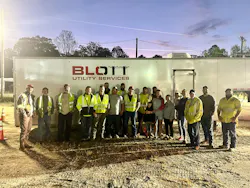
Beyond line wives personally connecting on social media, some have launched official groups to coordinate assistance. For example, one public Facebook group with more than 50.5K followers is titled, “Feed Linemen: Tell Us Where You Are So We Can Bring You Food and Water.” This group, started five years ago, connects lineworkers on storm duty with resources. For example, the group has posted a list of supplies requested by lineworkers as well as their need for sleeping accommodations, hot meals and help with laundry services during storm response.
“I started this group because I read comments about linemen not being able to find food,” the founder of the group stated. “They are working hard to get our communities up and running. If you find linemen on your street, bring them water and snacks — random acts of kindness!”
Line families also help out each other when their loved ones are away for extended periods of time. For example, Diggs said her husband spent a month last summer in Guatemala running power to two villages, and his coworkers back home were very supportive. For example, they offered to mow the grass or do anything she needed in his absence. “We mainly stay in touch by having each other’s phone numbers,” she said. “We know that no request is too small or large for someone to come and help with. It’s more like family than coworkers.”
Supporting Line Families: Ways to Get Help
When a line family experiences the loss of a loved one, they can turn to not only their friends and family, but also special assistance groups, which can help support them in their time of need. Here are just a few of the groups that can help those in need.
- National Sisterhood United for Journeymen Linemen (NSUJL): This 501(c)(3) nonprofit helps families of fallen or injured IBEW and utility lineworkers. They provide direct financial help, pay for therapy, and assist with mortgage or car payments. Explore their resources or apply for assistance on the NSUJL website.
- Line Brother's Keeper: Founded by an injured lineman, this organization provides emergency financial, emotional, and physical help. They aid anyone from apprentices to journeymen. Find out more or request support at Line Brother's Keeper.
- Fallen Linemen Organization: This nonprofit memorializes fallen workers and helps the families impacted by severe injuries. They also track accident data to promote safer work practices. Learn about their mission at the Fallen Linemen Organization
- Fallen Linemen Foundation: This group supports injured linemen, their families, and burn care facilities. Read their story at Fallen Linemen Foundation
Coming Together
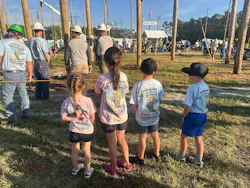
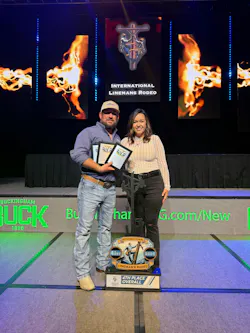
In addition to supporting their loved ones and fellow lineworkers during storm response, line families can also come together during the International Lineman’s Rodeo Week. For more than 40 years, lineworkers have competed in events like the pole climb and hurtman rescue with their wives, husbands, kids, parents and grandparents supporting them from the sidelines.
Burrell said seeing her husband compete in the Rodeo is one of the most memorable parts of being a line wife. Not only is it a fun time, but it also gives her a better understanding of what he does every day and has helped them to build a community with other line families. She said seeing him in that environment makes her very proud.
Diggs agreed, saying her husband has competed in several local, regional and international Rodeos throughout his career. They have traveled to many different locations for him to compete, and along the way, they have made lots of new friends. “Just watching him being proud of the job he does is worth it,” she said. “We have met so many amazing people over the years, and I wouldn’t trade that for anything.”
Diggs said Michael has competed in every Tennessee Valley Rodeo since its beginning in 1998. One Rodeo, however, stood out in her mind—when her husband competed in the Tennessee Valley just two months and 10 days after having major brain surgery. “To say that I’m proud is somewhat of an understatement,” she said. “Michael has competed in the Rodeos since they began, and he loves it.”
Michael has served as chairman of the safety committee and instructor for the hurtman, bucket truck and self-repel rescue at the Tennessee Valley Rodeo. He has also competed in the American Public Power Association (APPA) Lineman’s Rodeo for 15 years and volunteered to serve as a master judge at the Kentucky Lineman’s Rodeo for the past nine years. Her family also traveled from Tennessee to Kansas for the International Lineman’s Rodeo Week, where he placed as an apprentice in 1998, 1999 and 2000 and later a senior team in 2022, 2023 and 2024.
“He and our son also competed together in the contractor division, placing sixth overall,” he said. “They missed walking the stage by 23 seconds.
Swayne said there is so much pride to watch them in their element. “I think the Rodeo is wonderful because families get to really see what these men and women endure, and what a true skilled trade line work is,” she said.
At the same time, however, she said the hurtman rescue is the one event that hits her hard whenever she is on the Rodeo grounds. "Knowing that they’ve had to literally save a fellow lineworker who may have been electrocuted or even caught fire on the pole or in the bucket — that’s very sobering to think about,” she said.
She encourages other line wives to stay strong and be proud to be a “line wife.” “I can’t imagine it any other way, and again, I am so grateful to be the ‘power behind the power,’” Swayne said.
Line Wives: Pick Up Your Free Temporary Tattoos at the T&D World Booth at the International Lineman's Expo

Editor’s Note: To celebrate line wives and all they do to support their beloved lineworkers, we will be giving away free temporary tattoos, designed by Nikki Chandler’s daughter, Grace, at the 2026 International Lineman’s Rodeo in mid-October.
Swing by the booth to also get your copy of the Lineworker Supplement and participate in a recording for a future episode of the T&D World Line Life Podcast, available at linelife.podbean.com.
Connecting Online: Social Media Groups for Line Wives
Lineworkers’ spouses have been connecting for decades on social media platforms to share advice, resources and support. For example, tags on social media include #linewife, #linemanwife, #LineWivesofInstagram, #ProudLineWife and #StormWife among countless others. For those line wives looking for camaraderie and support, the following are just a few of the many available to join as either public or private forums.
- Linewife: With 1.8K followers on Facebook, this group offers support, inspirational quotes and line wife merchandise to wives and girlfriends of lineworkers.
- Powerline Wives: This private group with 2.4K followers is a sisterhood for women who live the life of a power lineman’s wife.
- Lineman Wife: Available on Instagram with more than 245 reels, this group was started on Instagram by a line wife after experiencing the realities of lineman family life firsthand.
- Line Wives: With 2.8K members, this private group on Facebook is a place to share pictures and stories and express worries about a lineworker spouse.
- Lineman Wives: Designed for wives, girlfriends and mothers who love a lineman.
- IBEW Tramp Wives: A place where the wives of IBEW journeymen wiremen and linemen on the road can vent, give advice and have other people to talk to who are living with their husbands on the road or traveling the country with their “tramp.”
- Line Wife Buy and Sell: This group is designed to support line wife-owned businesses.
- Line Wife Tribe: This Instagram page sells apparel and merchandise to celebrate the line life.
- Linetok Wives: described as a “travel SAHM line life clique who love tramping, friendship and fun.”
Line Life Listens: A Musical Tribute to Line Wives
Music is the soundtrack of our lives, and we at T&D World wanted to share our love of melodies with our field audience. Since April 2026, we have released special musical playlists for our T&D World Line Life Podcast listeners for our “Line Life Listens” series.
In July, we aired a playlist dedicated to line wives, including a blend of inspirational and empowering songs and sentimental love tunes. Check it out at tdworld.com/electric-utility-operations.
If there are any songs you’d like to add to this playlist or if you want to share one of your own for Line Life Listens, email Amy Fischbach at [email protected].
Here are just a few of the songs on the special playlist for line wives:
- “Wife of a Lineman” by Chris Blaney
- “She’s Got His Back” by Thomas Martinez
- “Superwoman” by Alicia Keys
- “Better Together” by Jack Johnson
- “Fearless” by Taylor Swift
About the Author
Amy Fischbach
Electric Utilities Operations
Amy Fischbach is the Head of Content for T&D World magazine and manages the Electric Utility Operations section. She is the host of the Line Life Podcast, which celebrates the grit, courage and inspirational teamwork of the line trade. She also works on the annual Lineworker Supplement and the Vegetation Management Supplement as well as the Lineman Life and Lineman's Rodeo News enewsletters. Amy also covers events such as the Trees & Utilities conference and the International Lineman's Rodeo. She is the past president of the ASBPE Educational Foundation and ASBPE and earned her bachelor's and master's degrees in journalism from Kansas State University. She can be reached at [email protected].