Updated Fall Protection Standards May Leave Many Utility Crews at Risk
Many utility organizations may be unknowingly operating out of compliance with current fall protection requirements, according to a new FallTech white paper focused on utility, substation and power plant work.
The paper, "Stopping the Fall Isn’t Enough," examines how recent updates to self-retracting lifeline performance standards are reshaping safety expectations across the utility industry.
Recent changes to ANSI SRL criteria clarified that Class 1 SRLs are intended for anchorage at or above the D-ring, while Class 2 SRLs are designed for below-D-ring tie-off, leading-edge exposure and higher-energy conditions. These conditions are common in utility work, yet many crews continue to rely on equipment selected under older assumptions. While that equipment may still stop a fall, it may not control arrest forces or meet today’s performance expectations when reviewed after an incident.
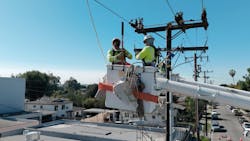
Utility environments often involve multiple hazards at once. Crews work at height from bucket trucks, lifts and fixed structures, frequently tying off at waist level or lower. At the same time, they may be exposed to energized equipment and arc flash risk. The white paper explains why these overlapping hazards create compliance challenges that are easy to miss during normal operations but become highly visible after an audit, injury or investigation.
The paper also addresses a growing gray area in arc-flash-rated fall protection, where material ratings alone may not reflect how a complete system performs after exposure to extreme heat. In these situations, device classification, testing and documentation play a critical role in whether equipment choices can be defended.
“We’ve identified a gap between recent SRL standard updates and how fall protection is being used in real-world utility work,” says Zack Winters, director of product & applied engineering at FallTech. "In some cases, equipment that was once considered acceptable may no longer meet current performance expectations. We’re committed to advancing fall protection education across the industry. This white paper helps close the knowledge gap by clarifying what’s changed, how it affects utility work, and what safety leaders should review moving forward."
Stopping the Fall Isn’t Enough is written for utility safety professionals seeking clear, practical guidance on how standards have changed, how Class 1 and Class 2 SRLs differ and how differences apply to real work conditions. The paper emphasizes awareness and informed decision-making, not product promotion.
The white paper is available for download at no cost. Those interested can visit https://www.falltech.com/utilitywhitepaper.