DLC Integrates Robotics and Physical AI for a Smarter, Safer Power Grid
Key Highlights
- DLC partners with PRN to access regional robotics expertise, enabling rapid sourcing and piloting of innovative solutions tailored to utility needs.
- Robotics are primarily used to extend utility workers' capabilities, especially in hazardous, repetitive, or physically demanding tasks, rather than replacing jobs.
- Emerging technologies like autonomous drones, tunneling robots, and hybrid rover-drone platforms are already being tested for asset inspection and maintenance.
- The utility industry is actively exploring robotics applications to improve safety, reduce operational costs, and strengthen grid resilience against extreme weather events.
- DLC's open innovation approach involves defining operational problems and inviting industry partners to propose practical, scalable solutions.
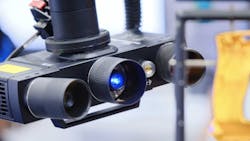
Electric utilities face growing operational pressure in an increasingly complex environment — from extreme weather events and aging infrastructure to resource constraints. Recent advances in physical AI (the embodiment of intelligence inside machines), robotics and automation have redefined the field, expanding the scope of possibility for the unique and emerging demands of utility applications.
In practice, the most promising robotics are an extension of seasoned utility professionals to enable physically intensive, repetitive work and mitigate high hazard environments. As utilities are challenged to meet the growing demands of affordability and reliability, robotics may offer an innovative adaptation in traditional utility operations.
In 2025, Duquesne Light Company (DLC) joined the growing number of electric utilities exploring how robotics, automation and physical AI can improve operational efficiency and safety across the grid. For more than 100 years, DLC has provided safe and reliable electric service to communities in southwestern Pennsylvania, and today, the utility serves more than 600,000 customers. The utility operates within a uniquely dense technology ecosystem, serving the city of Pittsburgh, a globally recognized center for robotics and AI innovation.
Forging a Partnership
In August 2025, DLC announced a partnership with the Pittsburgh Robotics Network (PRN), an organization representing more than 250 robotics and AI companies spanning 18 industry verticals in the region. PRN facilitates commercial business growth and talent development opportunities for the region’s robotics, autonomy and AI cluster by connecting local companies, academic institutions, investors and entrepreneurs in southwestern Pennsylvania.
This technology ecosystem provides DLC with a unique opportunity: direct access to mature robotics capabilities, shorter innovation cycles and a local network capable of rapidly sourcing, vetting and piloting technologies aligned to real utility needs. Since the launch of this partnership in August, PRN has investigated potential use cases for physical AI solutions with DLC teams.
In addition to evaluating technologies internally, DLC seeks to accelerate utility product development in robotics through its collaboration with PRN.
“DLC is proud to partner with the PRN to promote groundbreaking industry solutions and cooperate with electric utilities across the nation to make our grid smarter and more efficient,” said Brian Guzek, DLC’s vice president of operations. “The partnership marks an exciting step forward in our commitment to innovation, and we take pride in leading the charge to modernize operations to support team members, customers and our community.”
A Need for Innovation
DLC provides electric services for more than 600,000 customers in communities across southwestern Pennsylvania and faces the affordability and reliability pressures affecting the industry at large. In April 2025, the most destructive storm in the company’s 145-year history caused widespread infrastructure damage and impacted service to nearly half of its customers. The event accelerated DLC’s goal to harden and modernize the grid to deliver consistent, reliable and resilient service.
The company is actively deploying technologies that enhance monitoring, resilience and safety. DLC’s drone program pairs advanced technical insight with aerial drone imagery and thermal capture to inspect grid assets and rights of way (ROW), assess storm damage to the system and support engineering and technical analysis.

DLC deploys advanced Gridware sensors and LineVision dynamic line ratings to improve grid management and operational flexibility while reducing costs. Enhanced inspection tools are also currently in pilot to improve vegetation management and overhead inspection to improve reliability.
The need to strengthen grid resilience is unfolding in parallel with mounting pressure on customer bills. As energy supply prices increase, DLC works to provide the most affordable service possible to customers. Following the 2025-2026 delivery year capacity auction through PJM Interconnection — the regional grid operator that manages electricity transmission and wholesale power markets across 13 states — capacity prices increased 800%. The significant spike is causing Pennsylvania customers to pay about $2.18 billion more to power plant owners in PJM’s region. Robotics and physical AI offer additional opportunities to reduce operating costs, deploy resources more effectively and help mitigate upward pressure on customer bills.
Structuring Innovation for Success
The emerging challenges of the utility landscape have coincided with recent growth in the robotics and physical AI industry. Although DLC explored robotics applications in previous years, high costs and long development cycles prevented pilot programs or successfully scaling technologies. Since then, the rapid growth and application of AI across the robotics industry have lowered costs, expanded vendor capabilities and dramatically accelerated timelines.
“Markets for utility robotics and advanced automation grow significantly, fueled by AI/ML integration for predictive analytics and grid resilience. Robot-assisted operations are gaining traction in field maintenance, renewable energy infrastructure (such as solar fields) and substation tasks, while collaborative robots improve precision and safety in assembly and quality control,” said Jenn Apicella, executive director of PRN.
In 2019, DLC created its Innovation Center to evaluate and implement new technologies like robotics and automation applications. This team is devoted to identifying new technologies across the organization based on needs-driven evaluation. To ensure sustainable innovation, it validates technologies to produce actionable outcomes and productive vendor partnerships. Open innovation is central to this approach. Rather than prescribing specific technologies, DLC defines the operational problem to be solved and invites solution providers, researchers, industry partners and trusted robotics advisors to propose practical, deployable concepts. This structure accelerates learning, reduces development risk and increases the likelihood that solutions can scale beyond pilot environments, while continuing to build DLC’s internal knowledge.

Changing Perceptions
Even as advances in robotics and grid pressures strengthen the case for these technologies, perceptions of robotics continue to challenge adoption. In their 2025 AI & Robotics Sentiment Survey, PRN identified that respondents were nearly split on whether robotics and AI will have a positive or negative impact on future jobs (48% somewhat/very positive).
Perceptions of the capabilities of “robotics” and what they can accomplish in a utility setting can vary widely. Early feedback at DLC revealed skepticism of overly complex or limited use tools, as well as the concern of workforce replacement. Extensive engagement and communication with stakeholders throughout the organization were crucial to ensuring alignment and direction for DLC’s robotics initiative.
Consistent with PRN’s survey findings, team members were most excited about the use of robotics for inspection and maintenance of assets (43%), assist in hazards environments (49%) and respond to damage/disaster relief (47%). Today, hardy and hybrid robots have emerged to navigate complex terrains like cable-crawling or tunneling robots and hybrid rover-drone platforms that collect asset-health data. Rather than eliminating work, these technologies augment hazardous, repetitive and physically intensive tasks that strain crews and limit operational capacity.
Putting Innovation into Action
Emerging robotics, automation, and physical AI technologies are already being applied across a range of real-world utility use cases. Here are some examples:
- Early-adopter utilities like National Grid are deploying autonomous devices for substation inspections using thermal, acoustic and visual sensing.
- Con Edison develops semi-autonomous systems capable of racking breakers in and out.
- PG&E is engaging in pioneering underground technology as new robotic concepts emerge that reduce the cost and invasiveness of traditional methods.
- Tools like automated machines that prepare or splice medium-voltage cables, biologically inspired tunneling bots and hybrid rover–drone platforms designed to collect asset-health data in hard-to-access environments are also being developed across the country.
- In the renewable sector, robotics is accelerating solar deployment through automated panel cleaning, installation support, and site-scale O&M solutions — demonstrating how physical AI has the potential to influence nearly every layer of utility operations.
Inside the DLC-PRN Partnership
The DLC-PRN partnership comprises internal use-case exploration to industry collaboration and implementation. High-value applications for physical AI were identified through a series of workshops with internal DLC teams and PRN. This process surfaced priority operational use cases such as:
- Closing overhead high-voltage (HV) devices.
- Remote hazard, damage and work inspections.
- Indoor substation switching and equipment operations.
- Lid lifting for underground access.
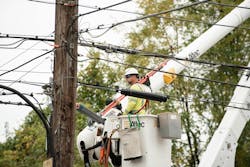
These use cases reflect common challenges across the utility industry, including safety exposure, environmental variability and high operational frequency, particularly in post-storm conditions. PRN evaluated each use case against existing technology assessing technical feasibility, scalability and readiness for deployment. From that analysis, PRN identified a top candidate for a potential pilot program. According to Apicella, “Closing overhead HV devices stands as a high-priority, readily achievable opportunity due to its daily occurrence and potential for automated solutions.”
PRN also consulted with DLC to expand existing innovation initiatives such as its drone program, which launched in 2023. PRN identified advanced real-time image analytics and sensing technologies that can be integrated into drone platforms to continue to unlock the potential of this technology in field work.
Engaging With Peer Utilities
DLC and PRN will host the Utility Robotics & Automation Roundtable on March 23, bringing utilities together to look at operational challenges and jointly evaluate emerging robotics and automation opportunities. It will promote product development by identifying use cases with the greatest collective value — creating the industry alignment needed to guide vendors, accelerate development cycles and advance the next generation of robotics solutions for safer and more reliable grids. Peer utility organizations can share insights, compare challenges and prioritize high-impact applications.
DLC looks forward to evaluating candidate technologies with vendors through initial test and pilot phases, to mitigate hazards and enhance efficiency through targeted investment. By equipping its workforce with the tools needed to meet a new generation of grid challenges, DLC is future-proofing operations to deliver safe and reliable service to customers.
Editor’s Note: For inquiries about the Utility Robotics & Automation Roundtable event or the DLC-PRN partnership, contact [email protected]. Visit the event page to learn more and find registration information: https://43906301.hs-sites.com/utility-robotics-roundtable-event
Pittsburgh: A National Epicenter for Robotics and Physical AI
The Pittsburgh region has become one of the world’s most concentrated robotics hubs, home to more than 250 robotics, automation and AI companies anchored by Carnegie Mellon University’s Robotics Institute and the National Robotics Engineering Center. PRN is an integral component of this ecosystem, bringing together industry stakeholders at events such as the annual Robotics & AI Discovery Day, which attracted more than 10,000 participants and more than 250 exhibitors this year.
Pittsburgh also has a deep energy-innovation legacy, shaped largely by Westinghouse’s global nuclear footprint and the Department of Energy’s National Energy Technology Laboratory — an anchor in federal research in advanced power systems and grid reliability. The combination of local AI discovery and locally based energy exploration brought the 2025 Pennsylvania Energy and Innovation Summit to the campus of Carnegie Mellon University, which drew government leaders and industry stakeholders to commit more than $90 billion in investments for energy and AI projects in the Commonwealth.
About the Author
Grace Stewart
Grace Stewart ([email protected]) is an innovation associate working in DLC’s Innovation Center. She graduated from Lehigh University in May 2025 with a bachelor’s of science in business and economics. Grace joined DLC as a corporate strategy intern in 2024, supporting innovation projects and new products and services. Prior to joining DLC, she did business development and marketing strategy for an AI startup. Her projects at DLC include robotics and AI integration; marketing strategy for new products and services and real estate asset monetization. She is passionate about advancing a clean, reliable and sustainable energy future through innovation, customer empowerment and decarbonization-focused solutions.
Velvet Gaston
Velvet Gaston ([email protected]) is the manager of innovation at DLC, investigating and validating novel solutions to deliver value for transmission and distribution operations. She has a background in engineering and new product development, with a focus on commercializing emerging energy technologies in her work at Form Energy and EDF Renewable Energy. Her career has been defined by helping organizations launch new products and services; scale startup/pilot operations and stand up first-of-their-kind programs. She leverages technical curiosity and design thinking to drive exceptional results to support her teams, serve customers and deliver a reliable grid.