Safeguarding Human Flight Amid Drone Expansion
Key Highlights
- Utility helicopters operate in power line corridors daily, requiring constant vigilance and teamwork to ensure safety.
- FAA's new rules aim to incorporate routine drone access into shielded airspace, raising questions about safety and right-of-way management.
- Effective communication, including digital systems and traditional methods, is crucial for safe coordination between manned and unmanned aircraft.
- Technological advancements like geofencing, ADS-B, and obstacle avoidance are key to integrating drones safely into shared airspace.
- Regulatory history shows a steady progression towards routine BVLOS operations, enabling more efficient infrastructure inspections with minimal safety incidents.
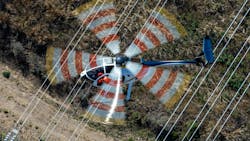
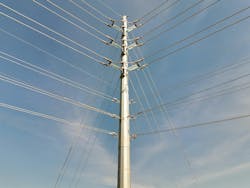
The wire environment is a workplace few see up close. Utility helicopters operate in these corridors every day, performing a wide array of activity, including construction, maintenance and inspection tasks. For lineworkers and pilots, working “inside the wires” means constant vigilance, decisive teamwork and reliance on experience and skilled flying.
The Federal Aviation Administration (FAA) proposed Docket FAA 2025 1908 marks a new chapter for these corridors. Parts 108 and 146 introduce rules for routine drone access, granting unmanned aircraft a significant presence in shielded airspace, the same space traditionally occupied by helicopters engaged in line work. The intent is to create modernization and efficiency, but for those who work on the lines, the biggest question is how these changes will impact daily operations and safety.
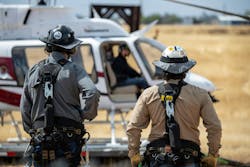
Protecting Shielded Airspace
A single day on a transmission corridor highlights the risks — helicopter pilots hover close to lines, sometimes with lineworkers positioned on long lines or working directly from the skid of the aircraft. Even minor distractions, small objects, birds or a shifted wind can pose immediate danger. The addition of unmanned aircraft in these spaces, especially under assumptions that shielded areas are low risk, raises new concerns for avoidance, coordination and worker safety.
Shielded zones may look empty on a map, but they’re busy with activity, loading and unloading, tool drops, hardware installation and maneuvers that require a clear and distraction free space around the helicopter. For these missions, right of way is not an abstract concept, but a practical necessity to ensure safe flight and personal safety.
Ensuring Right-of-Way Safety
A key element of the FAA’s new proposal is a shift in right-of-way rules within shielded areas. Traditionally, aviation rules have prioritized the safety of manned aircraft, particularly those with limited maneuverability and high-risk missions. Utility helicopters carrying external loads or supporting line crews have almost no ability to quickly evade obstacles, making clear right of way vital.
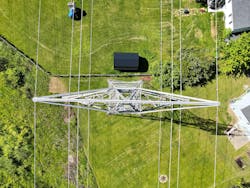
The proposal to give drones right of way in these corridors means more than changing airspace charts. It affects real people suspended above the ground. While automation and digital notification systems are promising, they cannot replace the need for visible, immediate awareness and human judgment in dynamic, risk-filled environments. In moments of confusion or surprise, technology alone is not enough.
Focusing on Communication and Coordination
Most helicopter operations currently rely on direct coordination: radio calls, visual checks, pre-mission briefings and situational awareness built on decades of best practice. Integrating digital protocols with these tried-and-true methods is an ongoing challenge, and effective safety will depend on systems that immediately clear drones from corridors in use by manned aircraft.
Technology like geofencing, Automatic Dependent Surveillance-Broadcast (ADS-B) and real-time coordination tools could form part of the solution, but only if designed to support on-the-ground realities. The goal is not resistance to progress, but pragmatic, layered communication that keeps the workplace above the wires as safe as possible.
Recognizing the Risks
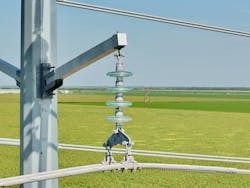
Risk models for shielded drone operations often overlook the persistent, unpredictable hazards line crews manage daily. The margin for error is slim, and every uncoordinated intrusion into active work zones is a serious concern. Aviation safety history is filled with incidents where obstacles, unexpected activity or a gap in communication led to injury or loss.
For policy to protect lineworkers and helicopter crews, it must begin with deep respect for practical experience and the lessons learned from decades of utility aviation. Rules and technology both work best when they empower, rather than bypass, the expertise and teamwork of those maintaining essential infrastructure.
The future of utility aviation is not about resisting change, but rather shaping modernization to ensure safety is a top priority. Right of way, rapid communication and robust deconfliction tools remain the cornerstone of every safe operation. When policymakers and technology developers prioritize human presence and risk, innovation and tradition can move forward together.
Reviewing the Timeline
One of the greatest challenges as a drone operator in the United States is regulatory uncertainty. In the civil/commercial sector, drones are relatively new to the airspace. In 2012 Congress passed the FAA Modernization and Reform Act, which set the initial framework for FAA drone rulemaking. From 2012 to 2016, the FAA began planning and designating test sites to study operations, detect-and-avoid, command and control and other integration challenges. This roadmap guided development of performance standards and identified technical gaps.
Operation and Certification of Small Unmanned Aircraft Systems, Part 107 was finalized in 2016. This created a clear, scalable regulatory path for routine civil/commercial operations of drones (<55lb). The rule included remote pilot certificate, visual line of sight limits, altitude and speed ceilings, daylight operations and a process to request waivers for operations outside standard limits.
In 2017, UAS Integration Pilot Program launched (IPP). IPP paired state and local governments with industry to safely test higher-risk operations (in real communities): night, flights over people, beyond visual line of sight and package delivery. IPP concluded in 2020 and was replaced with BEYOND to continue addressing integration challenges.
Going Beyond the Rules
The FAA has actively been working towards Part 108 and 146 rulemaking since 2017. All the while, drone technology has evolved at an extremely quick pace. These technological advancements will allow for the necessary safety measures to be put in place for shared airspace. Drones can now be equipped with multi-directional sensors for obstacle avoidance, LiDAR and AI to avoid dynamic obstacles with GPS and ADS-B In to deconflict with manned aircraft in the area. The next hurdle is getting the framework and rulemaking right the first time.
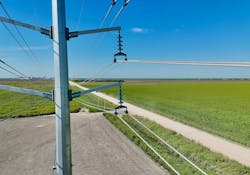
It’s more than technology that needs to be implemented. Just like any well-run team, communication is key. Leaning into our options for communication and providing a standardized framework to increase safety is top priority. UAS Traffic Management systems, ADS-B In capable drones, geofencing during low altitude helicopter flights and continued use of LAANC with NOTAMs and TFRs can bridge this communication gap.
Making the Case for Expanded Drone Operations
Traditional inspection methods force workers into hazardous environments. Drones significantly decrease this risk. What do part 108 and 146 mean to drone operators in infrastructure? It’s a huge step in the right direction to allow those who are equipped with the right technology, experience and knowledge to advance the industry. It allows one individual with one drone to:
- Perform around 80 miles of routine linear patrol and inspection on transmission and distribution lines in one day
- Conduct post-storm damage assessment quicker and more efficiently than ever before
- Scan infrastructure to see beyond the human eye with LiDAR and infrared for many miles at a time.
According to the June 30, 2025, report by the U.S. Department of Transportation Office of Inspector General, the FAA has issued 190 waivers specifically for Beyond Visual Line of Sight (BVLOS) operations as of October 2024. AUVSI reports 657+ active BVLOS waivers as of August 2025. These waivers are granted only after rigorous safety assessments, requiring detailed risk mitigation procedures, redundant communication/navigation systems and proven detect-and-avoid capabilities.
The successful implementation of these operations, with no major safety incidents reported under FAA-approved BVLOS waivers, demonstrates that BVLOS can be conducted safely when supported by modern technologies. Just as there are many different types of helicopter pilots, the same can be said for drone operators.
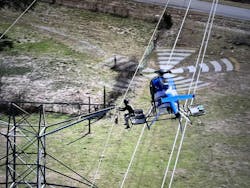
When looking to the future of these new FAA rules, every scenario needs to be explored to ensure safety is our number one priority. The general right-of-way rules for manned aircraft currently give priority to those with the least amount of maneuverability. Even in shielded operations, this needs to stay a priority.
The implementation of future regulations, specifically Part 108 and 146, represents a crucial step for infrastructure inspection, enabling a single operator to perform complex tasks like linear patrol and post-storm damage assessment far more efficiently and safely than traditional methods. These regulations must have a standardized form of communication between drone operators and manned aircraft.
We have the technology and the road map and now we need implementation to allow for safe, shared airspace. Listening to those already in this airspace will be crucial to safe implementation, specifically in shielded areas. BVLOS can greenlight a new era of safer, more efficient, and more reliable infrastructure management for all.
Considering One Corridor’s Future: Two Perspectives
As airspace policy evolves, the voices of those working inside the wires and those flying above it must unite in shaping the future. Shared airspace is possible and necessary, but technology and policy must serve, not supplant, the human factor. When the next outage strikes, the next inspection is due, or the next drone mission launches, the focus must remain on safety, collaboration, and respect for whoever is “inside the wires.”
Moving forward, a culture of proactive communication must be built, with regular dialogue between drone operators, helicopter crews, regulators and utility safety professionals. Mutual understanding, ongoing training, and continuous engagement in the development of standards will empower all parties to anticipate risks and respond rapidly when the unexpected occurs.
The corridor above our power lines is not just a workspace, it’s a place where innovation and expertise intersect for the public good. By fostering this spirit of partnership, we can ensure that progress in technology fully supports, rather than compromises, the essential work that keeps our communities connected and safe.
About the Author
Mike Starner
Mike Starner ([email protected]) CUSP, CHST and CLCP is the executive director, Outside Line Safety for the National Electrical Contractors Association (NECA). He is a journeyman lineman and member of IBEW Local Union 70 in Washington, D.C. He brings more than 30 years of experience spanning field operations, management and industry leadership. In his current role, he leads initiatives that shape safety standards and best practices impacting thousands of electrical contractors nationwide. He served as the co-chair of the EEI Joint Contractor Safety Task Force and a member of the executive subcommittee for the National Electrical Safety Code (NESC). He also contributed to national safety policy through the OSHA ET&D Partnership Steering Committee and served on the boards of the Electrical Safety Foundation International (ESFI), the Electrical Industry Certification Association (EICA) and the National Cable Splicing Certification Board (NCSCB).
Heather Moran
Heather Moran ([email protected]) is the owner of Level Ascent Solutions, which uses unmanned aircraft systems (UAS) to offer aerial data solutions to improve efficiency, safety and speed, empowering businesses across industries. Heather obtained her sUAS level 1 Thermography certification and earned her undergraduate and doctorate degree at the University of Cincinnati.