Caribbean Transmission Achieves U.S. DOE Presidential Permit for Project Hostos
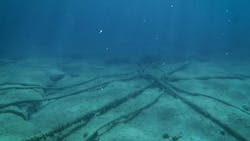
Caribbean Transmission Development Company (CTDC) has received the Presidential Permit from the U.S. Department of Energy for Project Hostos, a transformative 500 MW HVDC submarine interconnection cable to deliver firm, dispatchable power from the Dominican Republic to Puerto Rico beginning in 2031.
The Presidential Permit, required for all cross-border energy transmission facilities under Executive Order 10485, represents a federal validation releasing the path for private capital deployment in Caribbean energy infrastructure. The permit authorizes CTDC to construct, operate, and maintain transmission facilities crossing the international maritime boundary in the Mona Passage, following a comprehensive interagency review process coordinated by the U.S. Department of Energy.
Project Hostos is structured as a 100% privately financed initiative. The total project cost of $2.5 billion is allocated across key components:
- 500 MW combined-cycle power plant
- 90 km of overhead 345kv AC transmission line
- 150 km of subsea 320kv HVDC transmission line
- 6 km cable stretching from the port of Mayaguez in western Puerto Rico, underground, rising to interconnect with the electric grid at the Mayaguez Substation
- AC-to-DC Converter Stations
The project centers on a 500 MW combined-cycle power plant to be constructed in San Pedro de Macoris, Dominican Republic, utilizing the latest gas and steam turbine technology. The facility will transmit power through three cable segments.
“Meanwhile, we continue to advance on other milestones for the rapid execution of the Project," said Tirso Selman, Project Director. "Our development timeline and cost structure benefit significantly from building in the Dominican Republic, where permitting processes are more streamlined and construction costs are 25-30% lower than comparable Puerto Rico-based projects."
For Puerto Rico, the project addresses critical vulnerabilities exposed by recent hurricanes while positioning the island to retire inefficient legacy energy generation. When storms threaten Puerto Rico, power continues flowing from the Dominican facility. The interconnection cable is bi-directional, capable of providing power back to the Dominican Republic.
The continuous LNG supply to the Dominican plant eliminates the vessel swap interruptions that periodically disrupt Puerto Rico's current floating storage units, another critical resilience consideration.
"Project Hostos will provide the firm, flexible, and dispatchable baseload capacity Puerto Rico desperately needs to replace aging thermal plants, reduce blackouts, and enable the integration of more renewable energy," said Rafael Velez, founder and President of Atabey Capital, the Puerto Rico-based investment firm that serves as CTDC's founding investor and principal partner. "By connecting the two islands through proven subsea cable technology used successfully across North America, Europe, and Asia, we're not just building energy infrastructure; we're building resilience, reliability, and a bridge to Puerto Rico's clean energy future."
CTDC is engaged in a strategic partnership with Siemens Energy, which will supply the 500MW combined cycle power plant and both AC-to-DC converter stations in the Dominican Republic and Puerto Rico.
Working for the past three years with Jacobs, the international engineering firm, CTDC has optimized the cable routing through various marine and environmental surveys and horizontal directional drilling for nearshore installation, key matters for the U.S. Presidential Permit.
The advanced combined-cycle technology provides double the efficiency of Puerto Rico's aging steam units. This is equivalent to annual operational savings of up to $300 million while reducing emissions by 3.8 million tons of CO2 annually as compared to current generation sources.
The project will create more than 1,500 construction jobs and generate over $150 million in economic impact during the build phase. Once operational, Project Hostos will provide reliable power to the equivalent of more than 600,000 Puerto Rican homes while establishing the foundation for expanded Caribbean energy cooperation.