Duke Energy, North Carolina Regulators Advance Resource Plan to Meet Growth and Address Customer Costs
North Carolina regulators approve additional solar, battery storage, natural gas capacity and continued nuclear development as Duke Energy plans for rising electricity demand.
Duke Energy is advancing plans to expand electricity generation and infrastructure in the Carolinas following an order from the North Carolina Utilities Commission (NCUC) on the company’s 2025 Carolinas Resource Plan. The plan outlines how the company intends to meet growing electricity demand while keeping customer costs in focus.
“We know families and businesses are watching their energy bills closely, and we take that seriously,” said Kendal Bowman, Duke Energy’s North Carolina president. “The plan reflects an all-of-the-above approach – natural gas, solar, batteries and new nuclear – shaped by our customers and many partners across the state. We appreciate the commission’s careful review, and we’re committed to working together to keep the lights on, support economic development and hold down costs as the Carolinas grow.”
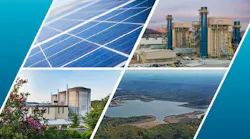
The plan combines natural gas generation, solar, battery storage and continued nuclear development, along with energy efficiency and demand response programs. Duke Energy said the approach is intended to address regional growth, reliability needs and infrastructure costs.
The resource plan was developed through a process involving the North Carolina Public Staff, customers, community and business leaders, and other stakeholders. Duke Energy said it will continue working with state leaders and stakeholders to address reliability, economic development and cost allocation, including ensuring large new energy users contribute toward the infrastructure required to serve them.
Some projects included in the order are already under construction, while others will require additional project-specific review and approval, with opportunities for public input.
Planned generation and storage additions
The NCUC order advances the following resources beyond those included in its 2022 and 2024 resource plan orders:
-
Solar: An additional 2,300 megawatts (MW), bringing planned solar capacity to 8,100 MW by 2034.
-
Battery storage: An additional 2,700 MW, bringing planned battery storage capacity to 5,400 MW by 2034.
-
Combined-cycle generation: An additional 2,720 MW from CC4 and CC5, on top of the previously approved 3,920 MW from CC1-3, for five combined-cycle units by 2033.
-
Combustion turbines: An additional 1,111 MW from CT5-7, beyond the previously approved 1,700 MW from CT1-4, for seven combustion turbines by 2032.
Nuclear development
The order authorizes continued development work supporting either small modular reactors or large light water reactor generation. Duke Energy is authorized to develop and submit amendments to the Nuclear Regulatory Commission for two AP1000 units at the W.S. Lee site in Cherokee County, South Carolina, and revisions to the combined license application for two AP1000 units at the Shearon Harris site in Wake County, North Carolina.
The NCUC also opened a new nuclear docket requiring quarterly updates on development progress. The docket will inform the commission’s evaluation of reactor technology, costs, financing, execution risks and customer protections before a decision is made on whether to build a new nuclear plant.
Planning for regional growth
North Carolina and South Carolina are experiencing population and business growth that is increasing electricity demand. Duke Energy said its resource investments are intended to address rising demand, replace aging infrastructure and maintain reliability for approximately 4.8 million customers across the Carolinas.
Cost-reduction efforts
Duke Energy said changes to the 2025 Carolinas Resource Plan reflecting state and federal policy updates reduced projected customer costs over the next decade by nearly half compared with the resource plan approved in 2024.
The company also identified several initiatives intended to help manage future costs:
-
Utility combination: Combining Duke Energy Carolinas and Duke Energy Progress, effective Jan. 1, is projected to save customers $2.3 billion between 2027 and 2040.
-
Tax credits: Nuclear and solar production and investment tax credits are estimated to generate $2.7 billion in net tax credits in the Carolinas from 2025 through 2028.
-
Federal grants: More than $110 million in U.S. Department of Energy (DOE) grant funding is intended to support reliability through transmission upgrades and power plant refurbishments.
-
Federal loans: Duke Energy has applied for DOE loans that could provide billions of dollars in additional customer savings.
Project construction and development
Construction is underway at facilities including the Person County Energy Complex and a second battery storage facility replacing the retired Allen Plant. Construction on the approved Anderson Natural Gas Project is expected to begin in 2027.
Duke Energy completed three solar projects in the Carolinas over the past year totaling 151 MW, with construction expected to begin on three additional projects totaling 192 MW. Regulators also approved planned combustion turbines at the site of the former Buck coal plant.
Duke Energy said it will continue working with the Public Staff, state and local officials, customers, and community and business partners as projects progress. The company also plans to continue offering energy efficiency programs and payment assistance to help customers manage their bills.